Burgundy Wines on Allocation: Only at U'Wine
- Fri, Oct 9, 2026
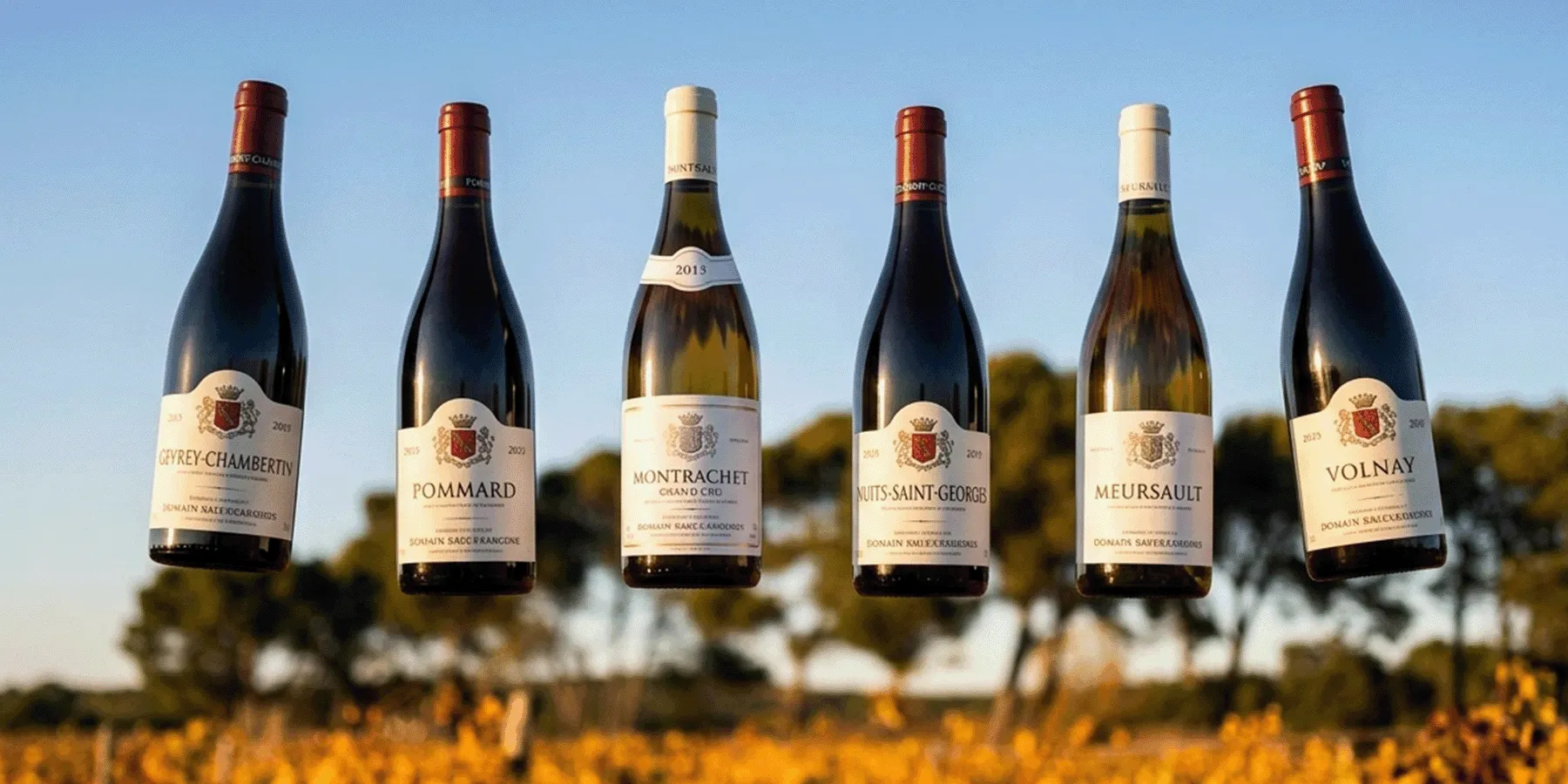
Burgundy Wines on Allocation: Only at U'Wine
A wine allocation is a reservation: each year, an estate sets aside a volume of bottles for a buyer, who commits to buying them, even in the less easy vintages. In Burgundy, some of the most sought-after estates sell their wines this way. U'Wine manages the allocations of many estates and then offers them to its members. In this article, a focus on five Burgundy estates among these allocations. And those five, only at U'Wine.
Here is how it works, why Burgundy lends itself to it, and how U'Wine gives you access to it.
Browse our Burgundy wine selections
What is a wine allocation?
No basket to fill, no “first come, first served”. An allocation is the share of wine an estate reserves for a buyer: the estate decides who buys, which cuvées and how many bottles.
Whoever receives it is called an allocation holder (allocataire in French). A négociant-allocataire, like U'Wine, receives allocations from estates in order to offer them to its members.
Four words so you don't get lost:
- Climat: a precise plot of vineyard, with its own name, soil and exposure.
- Premier cru and grand cru: the two highest tiers of the Burgundy hierarchy, above the village and regional appellations (four levels in total, according to the BIVB).
- Monopole: a climat owned by a single estate.
- Vintage: the year of the harvest.
Why is Burgundy so often sold on allocation?
Because supply is tiny. The estates are small, their vines cut into plots. Domaine des Terres de Velle produces 35,000 bottles on 6 hectares. Domaine Comte Georges de Vogüé, 36,000 on 12.5 hectares. All cuvées combined. The maths is quickly done.
And producing more to meet demand is not possible: each appellation's specification, validated by the INAO, sets limits on yields, among other things.
When demand exceeds what an estate can deliver, it has to choose who to sell to. Allocation organises that choice: it rewards loyalty rather than whoever arrives first.
How does it work in practice?
Every estate has its own rules. The pattern, though, comes back often. At U'Wine, we take care of it:
- The estate sets the volume allocated to U'Wine. Often a few cases per cuvée.
- The estate sets the price. It can change from one vintage to the next.
- U'Wine commits for the long term. Small vintages as well as great ones. Turning down a year can cost the next year's offer: keeping that commitment is up to us.
- Loyalty makes the difference. The most sought-after estates generally publish neither an allocation calendar nor an application procedure: access rests on a relationship built over time. That relationship is our job.
In plain terms: the relationship with the estates and the long-term commitment are our job. You then get access to the cuvées.
How do you get a Burgundy allocation?
There are three routes:
- The estate, directly. There is no official procedure. You introduce yourself, show your interest, and join a waiting list when there is one. The wait can be long, with no guarantee.
- A négociant-allocataire. It already has the relationship with the estates and offers part of the wines to its members. This is the U'Wine route: the relationship with the estates is our job.
- The secondary market. Auctions, online resale: you buy a bottle that has already been sold once. The price is the market's, not the estate's.
Why U'Wine (and nowhere else)?
Because you will not find these Burgundy allocations anywhere else. They are, moreover, only a selection of all the allocations that U'Wine manages. Concretely:
- Five Burgundy estates to discover, only at U'Wine: Terres de Velle, Henri Gouges, Château de la Maltroye, Jacques Prieur, Comte Georges de Vogüé.
- “Members only” cuvées, open to U'Wine members. To join: join the U'Wine community.
- Prices shown when they are public. No guessing: the prices quoted below are those on the website on 9 October 2026.
- A mission-driven company (entreprise à mission): making grands crus accessible.
Focus on 5 Burgundy estates, only at U'Wine
Domaine des Terres de Velle: a couple's small estate
Founded in 2009 by Sophie and Fabrice Larzone, Domaine des Terres de Velle farms 6 hectares and produces 35,000 bottles, spread over 16 wines. In 1999 Fabrice joined the négociant house of Alex Gambal in Beaune; Sophie joined him in 2004. Then they struck out on their own. In the middle of the vines stands a former 19th-century mill, working again since 2011.
Sensitive to organic farming and biodynamics, they use no herbicides or insecticides. Bottled without filtration: a slight sediment may remain at the bottom. That is not a flaw.
Displayed prices: from €80.50 (Meursault 1er cru Les Charmes white 2020) to €103 (Chassagne-Montrachet La Platière white 2021 and Puligny-Montrachet 1er cru Les Referts white 2021). The Volnay 1er cru Le Ronceret, the Corton-Charlemagne and the other cuvées are members only.
At U'Wine: an estate to discover only with us, with three cuvées at a displayed price.
Domaine Henri Gouges: the fourth generation at the helm
Domaine Henri Gouges is run by Grégory and Antoine Gouges, the family's fourth generation. 14.5 hectares, 60,000 bottles, 91% pinot noir and 9% pinot blanc, on clay-limestone soils (a mix of clay and limestone).
For about fifteen years, the vineyard has applied various principles of organic farming, with particular attention to biodiversity and the rooting of the vines. Another peculiarity: the “Pinot Gouges”, a white grape variety born from a mutation of pinot noir found in the vineyard. A pinot noir that decided to go white.
On the page: three Nuits-Saint-Georges 1er cru (Les Pruliers, Clos des Porrêts, Les Vaucrains), one Nuits-Saint-Georges and one Bourgogne Pinot Blanc.
At U'Wine: five cuvées, all members only, and only with us.
Château de la Maltroye: Chassagne-Montrachet and Santenay
Château de la Maltroye covers 15 hectares between Chassagne-Montrachet and Santenay and produces 60,000 bottles: 60% chardonnay, 40% pinot noir. Ageing lasts 14 to 18 months.
The building dates from the 18th century, with a glazed tile roof. The château itself is said to go back to Gallo-Roman times. The Cournut family has owned it since 1940. Jean-Pierre Cournut, a former aeronautical engineer, modernised the winery, which is now temperature-controlled.
On the page: several Chassagne-Montrachet 1er cru (Morgeot Vignes Blanches, Clos Saint-Jean, Les Chenevottes, Grandes Ruchottes, La Boudriotte, Clos du Château), village-level Chassagne-Montrachet and Santenay, in vintages from 2017 to 2022.
At U'Wine: all the cuvées shown are members only, and only with us.
Domaine Jacques Prieur: 9 grands crus and 3 monopoles
Domaine Jacques Prieur owns vines in seven prestigious appellations: Chambertin, Musigny, Clos de Vougeot, Échezeaux, Corton, Meursault and Montrachet. It counts 9 grands crus, 14 premiers crus and 3 monopoles, over 21 hectares, for 90,000 bottles: 67% pinot noir, 33% chardonnay.
In 1988, five great families bought the estate to keep it from falling into foreign hands. The Labruyère family runs it today. The wines age for 20 months, with 30 to 80% new barrels depending on the cuvée.
Displayed prices: Chassagne-Montrachet 1er cru Morgeot 2019, €98.50; Pommard 1er cru La Platière 2019, €127; Volnay 1er cru Santenots 2019, €141; Griotte-Chambertin 2018 (a grand cru), €269.60. Other cuvées, such as the Meursault Clos de Mazeray (a monopole), are members only.
At U'Wine: some cuvées at a displayed price, others members only, all of it only with us.
Domaine Comte Georges de Vogüé: Musigny and Bonnes-Mares
Domaine Comte Georges de Vogüé farms 12.5 hectares for 36,000 bottles: 95% pinot noir, 5% chardonnay. It owns the largest plot of the Musigny grand cru, its signature wine.
On the programme: violet and soft fruit in its youth, then undergrowth and leather after many years. It is a wine for laying down: it improves as it ages. It knows how to wait.
On the page: Bonnes-Mares (2020 and 2017) and Musigny Vieilles Vignes 2015 (from older vines).
At U'Wine: Bonnes-Mares and Musigny, members only, only with us.
FAQ: wine allocation in Burgundy
Fine wine is worth your passion

+ More than 1,400 wines
Bordeaux, Burgundy, Rhône Valley, Italy, ...
Secure delivery
Break-free delivery with our technology.
The 1% of the planet
From more than 250 top domains in the world.
The Cave INVEST offer and the Cave CONSO offer have been the subject of information documents registered by the Autorité des Marchés Financiers.